¿Por qué el copilot self-hosted se está convirtiendo en el estándar para el desarrollo Enterprise?
La seguridad de la propiedad intelectual es el principal motor de la transición hacia soluciones locales. Al utilizar GitHub Copilot o Cursor, su código, aunque sea de forma cifrada o anonimizada, se transfiere a los servidores de Microsoft o Anthropic. Para empresas con requisitos de seguridad estrictos (NDA, fintech, sector público), esto representa un riesgo inaceptable. El despliegue de un copilot self-hosted dentro de su propio perímetro en un servidor dedicado o VPS resuelve por completo el problema de la fuga de datos.Viabilidad económica e independencia
La suscripción a Cursor Pro o GitHub Copilot cuesta, de media, $20 al mes por desarrollador. En un equipo de 10 personas, esto supone $2400 anuales. Alquilar un VPS potente o un servidor dedicado para dar servicio a todo el equipo resulta significativamente más económico. Además, no dependerá de las políticas de precios o de las restricciones de sanciones de los proveedores occidentales.Control sobre la calidad de las respuestas
Al utilizar su propio github copilot, usted mismo elige el modelo. Si necesita escribir en un lenguaje de programación poco común o en un framework específico, puede conectar un modelo especializado de pocos parámetros o realizar un ajuste fino (fine-tuning) de uno existente. En las soluciones en la nube, está limitado a lo que ofrece el proveedor (normalmente Claude 3.5 Sonnet o GPT-4o).Elección de VPS para code llm self-hosted: procesadores, memoria y latencia
El rendimiento del asistente de IA depende directamente de la potencia del hardware. Para un funcionamiento fluido del autocompletado (autocomplete), la latencia debe ser mínima; idealmente, entre 100-200 ms para la generación de la primera tanda de tokens. Si planea ejecutar un code llm self-hosted en un VPS estándar sin GPU, el enfoque principal debe centrarse en la frecuencia del procesador y el volumen de memoria RAM.Requisitos del sistema mínimos y recomendados
Para el funcionamiento de los modelos de la familia DeepSeek-Coder o Llama 3 en formato cuantizado (4-bit o 5-bit), se requieren las siguientes características:- CPU: Mínimo 4 núcleos con soporte para instrucciones AVX2. Cuanto mayor sea la frecuencia de reloj (desde 3.0 GHz), más rápida será la generación.
- RAM: 8 GB para modelos 7B (mínimo), 16-32 GB para un funcionamiento fluido y almacenamiento de contexto en caché.
- Disco: NVMe SSD obligatorio, ya que los pesos de los modelos (4-10 GB) deben cargarse rápidamente en la memoria.
- Red: Canal desde 100 Mbit/s si el servidor se encuentra remoto al desarrollador.
Comparativa de modelos para autocompletado de código
Los modelos varían según el número de parámetros y la calidad de comprensión del contexto. Para soluciones self-hosted, los más elegidos son:- DeepSeek-Coder-V2-Lite (16B MoE): Líder en la relación precisión/velocidad. Gracias a su arquitectura Mixture of Experts (MoE), funciona rápido incluso en CPUs de gama media.
- DeepSeek-Coder-6.7B: Un clásico para servidores menos potentes. Ocupa unos 5 GB de RAM en cuantización de 4 bits.
- CodeLlama-7B/13B: Modelos de Meta, estables, pero a menudo superados por DeepSeek en tareas específicas de Python y JS.
- StarCoder2: Excelente opción para soporte multilingüe y trabajo con contextos muy extensos.
¿Busca un servidor confiable para sus proyectos?
VPS desde $10/mes y servidores dedicados desde $9/mes con NVMe, protección DDoS y soporte 24/7.
Ver ofertas →Instalación paso a paso de la combinación continue dev ollama en un servidor Linux
El proceso de despliegue se ha simplificado al máximo gracias al proyecto Ollama. Es una herramienta que empaqueta las complejas dependencias de las redes neuronales en un simple archivo binario y proporciona una API compatible con OpenAI. La combinación continue dev ollama permite convertir un servidor común en un potente backend para el desarrollo con IA en 10 minutos.Paso 1: Instalación de Ollama en el VPS
Conéctese a su servidor por SSH y ejecute el comando:curl -fsSL https://ollama.com/install.sh | shsystemctl status ollamaPaso 2: Descarga de modelos
Para trabajar necesitaremos dos modelos: uno para el chat (más potente) y otro para el autocompletado (lo más rápido posible).# Modelo para chat y refactorización
ollama pull deepseek-coder-v2:lite
# Modelo para autocompletado (autocomplete)
ollama pull deepseek-coder:6.7b-base-q4_K_MPaso 3: Configuración del acceso a la API
Por defecto, Ollama solo escucha enlocalhost:11434. Para que la extensión Continue.dev pueda comunicarse con el servidor, es necesario permitir conexiones externas. Edite la configuración del servicio:
sudo systemctl edit ollama.service[Service]:
[Service]
Environment="OLLAMA_HOST=0.0.0.0"
Environment="OLLAMA_ORIGINS=*"sudo systemctl daemon-reload
sudo systemctl restart ollama
Elección rápida
Ver planes VPS
¿Buscas un servidor que simplemente funcione?
Valebyte VPS: NVMe, soporte 24/7, despliegue en 60 segundos.
Configuración de VS Code y la extensión Continue.dev
Continue.dev es una extensión de código abierto para VS Code y JetBrains, siendo la herramienta más flexible para crear su propio entorno de trabajo con IA. A diferencia de los plugins cerrados, permite configurar minuciosamente cada aspecto de la interacción con el modelo.Configuración de config.json
Tras instalar la extensión en VS Code, abra el archivo de configuraciónconfig.json (normalmente a través del icono de engranaje en el panel de Continue). Debe especificar la dirección de su servidor.
{
  "models": [
    {
      "title": "DeepSeek Coder V2 Lite",
      "provider": "ollama",
      "model": "deepseek-coder-v2:lite",
      "apiBase": "http://your-vps-ip:11434"
    }
  ],
  "tabAutocompleteModel": {
    "title": "DeepSeek 6.7B Autocomplete",
    "provider": "ollama",
    "model": "deepseek-coder:6.7b-base-q4_K_M",
    "apiBase": "http://your-vps-ip:11434"
  },
  "embeddingsProvider": {
    "provider": "ollama",
    "model": "nomic-embed-text",
    "apiBase": "http://your-vps-ip:11434"
  }
}
Uso de túnel SSH para mayor seguridad
Si no desea abrir el puerto 11434 a todo internet, utilice la tunelización SSH. Esto garantizará el cifrado del tráfico y la autorización mediante claves. Comando para redirigir el puerto desde su máquina local:ssh -L 11434:localhost:11434 user@your-vps-iplocalhost:11434. Esto es especialmente relevante si se está trasladando desde plataformas en la nube. Sobre las sutilezas de la migración escribimos en el artículo Migración de AWS Lightsail/EC2 a dedicado: ahorramos $500-2000/mes.
Comparativa entre Continue.dev y Cursor: ¿qué elegir en 2025?
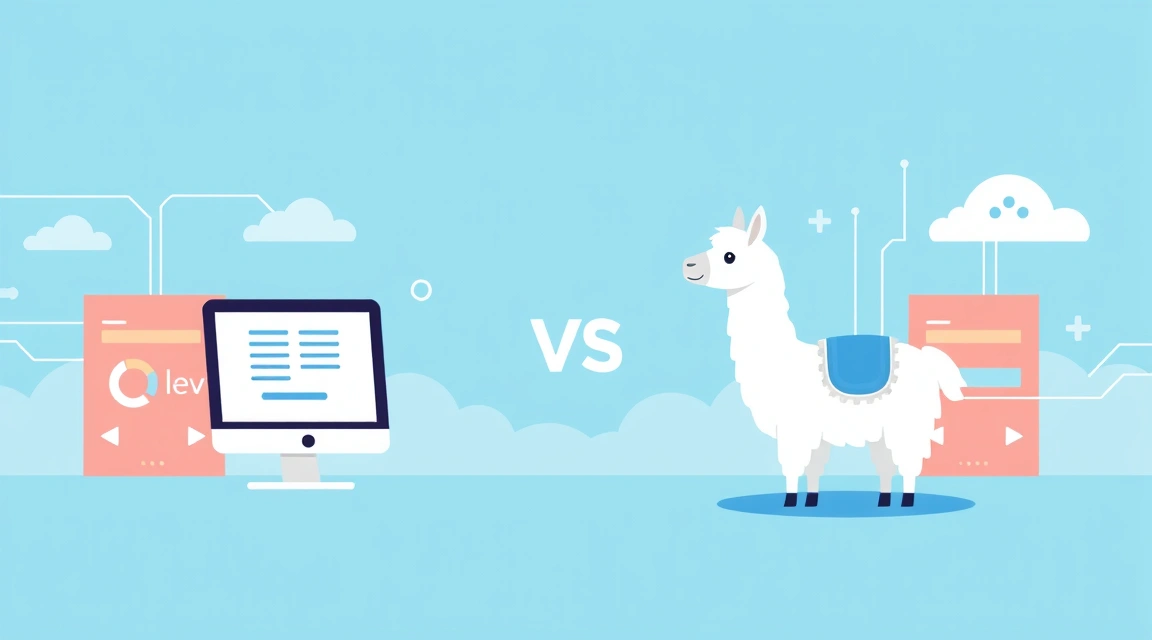
Cursor es un fork de VS Code con IA integrada. Es increíblemente cómodo "out of the box", pero su naturaleza cerrada y su precio obligan a muchos a buscar una alternativa a Cursor. Continue.dev ofrece casi la misma funcionalidad, pero en forma de plugin que se puede instalar en un VS Code limpio.| Característica | Cursor (Plan Pro) | Self-hosted (Continue + Ollama) |
|---|---|---|
| Costo | $20 / mes por usuario | Costo del VPS ($10-30 / mes por equipo) |
| Privacidad | Datos en servidores de Cursor/Anthropic | 100% local en su servidor |
| Selección de modelos | Claude 3.5, GPT-4o | Cualquier modelo de la biblioteca de Ollama/HuggingFace |
| Trabajo offline | No | Sí (en red local) |
| Indexación de código | En la nube (Remote Indexing) | Local (LanceDB / Vector DB) |
| Complejidad de configuración | Nula (instalar y usar) | Media (requiere configuración del servidor) |
Diferencias funcionales
Cursor destaca por su función "Composer", que permite generar código en varios archivos simultáneamente. Continue.dev está alcanzando rápidamente a su competidor implementando el soporte para "Edit Mode" (Cmd+I / Ctrl+I), donde la IA propone correcciones directamente en el archivo actual. Sin embargo, para un funcionamiento pleno de la indexación de toda la base de código en Continue.dev, podría requerirse una base de datos vectorial externa. Sobre cómo desplegarla, lea aquí: Vector DB en VPS: pgvector vs Qdrant vs Weaviate — qué elegir.Optimización de DeepSeek-Coder y Llama 3 para un autocompletado rápido
Para que su copilot self-hosted no se demore, es necesario optimizar el proceso de inferencia. El problema principal de la generación por CPU es la velocidad de lectura de los pesos desde la memoria.Uso de cuantización
La cuantización reduce la precisión de los pesos del modelo de 16 bits a 4 o 5 bits. Esto disminuye los requisitos de RAM entre 3 y 4 veces y acelera el trabajo proporcionalmente.- Q4_K_M: Equilibrio óptimo para la mayoría de las tareas. La pérdida de precisión es prácticamente imperceptible al escribir código.
- Q2_K: Velocidad máxima, pero el modelo puede empezar a confundirse con la sintaxis o generar alucinaciones.
Parámetros de la ventana de contexto
En elconfig.json de Continue.dev, puede limitar el número de tokens que el modelo ve "arriba" y "abajo" del cursor. Para el autocompletado en CPU se recomienda configurar:
"tabAutocompleteOptions": {
  "maxContextLength": 2048,
  "maxPromptTokens": 1024
}
Elección rápida
Ver planes VPS
¿Buscas un servidor que simplemente funcione?
Valebyte VPS: NVMe, soporte 24/7, despliegue en 60 segundos.
Economía de propiedad: su propio GitHub Copilot frente a suscripciones
Hagamos cuentas reales. Para el trabajo de un grupo de 3 a 5 desarrolladores, es suficiente con un VPS de alto rendimiento con 8 vCPUs y 32 GB de RAM. Un servidor así cuesta unos $30-40 al mes.- Gastos en suscripciones: 5 personas * $20 = $100 al mes.
- Gastos en servidor propio: $35 al mes.
- Ahorro: $65 al mes o $780 al año.
Tuning de modelos y contexto para aumentar la precisión del código
Para que su propio github copilot comprenda la especificuidad de su proyecto, Continue.dev utiliza el mecanismo de Context Providers. Esto permite "alimentar" al modelo no solo con el archivo abierto, sino también con:- Documentación de URLs externas.
- Resultados de la ejecución de comandos de terminal.
- Estructura de archivos del proyecto.
- Fragmentos específicos de código de otras ramas.
Conclusiones
Para una máxima privacidad y ahorro, elija la combinación de Continue.dev y Ollama en un VPS dedicado, ya que esto otorga un control total sobre los datos y permite utilizar modelos de primer nivel como DeepSeek-Coder-V2 de forma gratuita. Si, por el contrario, busca la máxima productividad "out of the box" y está dispuesto a pagar $20/mes, Cursor sigue siendo el líder indiscutible en calidad de UX, aunque pierde en flexibilidad de configuración para hardware específico.
SSD NVMe
¿Listo para lanzar tu VPS?
VPS NVMe con activación en 60 segundos: acceso root completo, más de 20 ubicaciones, pago con tarjeta o cripto.
Elegir plan