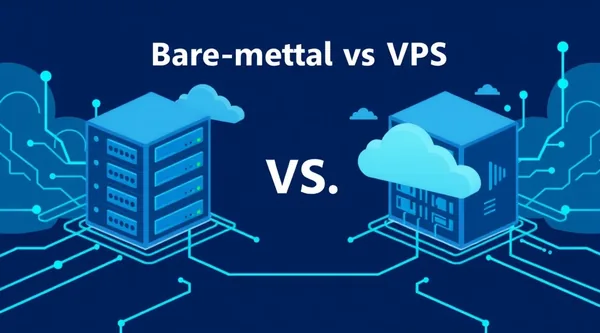
For ML inference of small and medium models on CPU, using a Bare-metal server becomes more cost-effective than a VPS when the constant load exceeds 40%. This is because the absence of a hypervisor frees up to 25% of computing power for vector instructions (AVX-512/VNNI), and the cost per request on a dedicated server at full utilization turns out to be 3-4 times lower than on cloud provider instances.
Why CPU ML Inference is Becoming the Standard for Small Models?
For a long time, the machine learning industry was dominated by the "GPU for everything" approach. However, in 2025-2026, the focus shifted toward optimizing the total cost of infrastructure ownership. Implementing ML on CPU became possible thanks to the development of quantization libraries (llama.cpp, OpenVINO, ONNX Runtime) and the emergence of specialized instructions in modern processors. If your task involves text classification, named entity extraction (NER), or working with BERT-like models, renting a GPU is often excessive and economically unjustified.
Evolution of Quantization and Architecture Performance
Modern model compression methods, such as 4-bit and 8-bit quantization, allow running neural networks with minimal loss of accuracy on standard server processors. For example, the Llama-3-8B model in quantized form requires only about 5-6 GB of RAM, making it an ideal candidate for running on a CPU. When choosing hardware, it is critically important to understand how much RAM a VPS or dedicated server needs, as memory bandwidth is just as much of a bottleneck during inference as processor frequency.
Use Cases: From NLP to Computer Vision
CPU inference is ideal for tasks where a latency of 100-200 ms is acceptable and the volume of incoming data does not require parallel processing of tens of thousands of threads, as is the case with GPUs. This is relevant for:
- Chatbots and customer support systems based on LLMs.
- Real-time sentiment analysis of texts.
- Image recognition on frames from surveillance cameras (1-5 FPS).
- Audio processing via Whisper (Small/Medium models).
Bare Metal vs. VPS ML Inference: Where Performance is Lost?
The main problem when comparing bare metal vs vps ml inference lies in the level of abstraction. A virtual private server (VPS) runs on top of a hypervisor (KVM, VMware), which introduces its own delays into CPU task scheduling. For a standard web server, this is unnoticeable, but for mathematical calculations using 100% of a core's power, the difference becomes critical.
Hypervisor Impact on AVX-512 Vector Instructions
Neural network inference relies on heavy matrix calculations. Modern Intel Xeon and AMD EPYC processors use AVX-512 instructions to accelerate these operations. In a VPS environment, the hypervisor may limit access to the full set of these instructions or introduce overhead for context switching between virtual cores (vCPUs). On a Bare-metal server, the process has direct access to the processor registers, providing a performance boost of 15-30% on identical hardware.
The Noisy Neighbors Problem and p99 Latency Stability
On a VPS, you share the physical processor with other clients. Even if cores are guaranteed to you, shared resources (L3 cache, memory bus) can be overloaded by neighbors. For ML inference, this means an unstable "tail" of delays (p99 latency). While the average response time (p50) might be the same, Bare-metal provides predictable processing time for every request, which is critical for user interfaces. Therefore, when deciding how to choose a CPU for a dedicated server in 2026, it is worth focusing on models with a large L3 cache.
Looking for a reliable server for your projects?
VPS from $10/mo and dedicated servers from $9/mo with NVMe, DDoS protection, and 24/7 support.
View Offers →The Economics of CPU Inference Hosting: Calculating Total Cost of Ownership (TCO)
When choosing cpu inference hosting, developers often look only at the monthly payment, forgetting the cost per request. Let's look at real figures for a model like Mistral-7B-v0.3 (INT4).
| Parameter | VPS (High Performance) | Bare-metal (Dedicated) |
|---|---|---|
| Configuration | 8 vCPU, 16GB RAM | 12 Cores (24 Threads), 64GB RAM |
| Monthly Cost | ~$45 - $60 | ~$90 - $120 |
| Performance (tokens/sec) | ~8-10 t/s | ~25-30 t/s |
| Requests per day (at 100% Load) | ~860,000 | ~2,500,000 |
| Cost per 1 million tokens | ~$1.85 | ~$1.40 |
When Scaling VPS Becomes More Expensive Than a Dedicated Server
If your project is in the prototype stage, a VPS is the best choice. It is an excellent hosting for an MVP startup, allowing you to launch quickly with minimal costs. However, as soon as the load becomes constant (for example, your bot processes requests around the clock), two powerful VPS instances at $50 each will lose to a single Bare-metal server for $90, not only in price but also in total throughput due to the absence of CPU usage limits.
Looking for a server that just works?
Valebyte VPS — NVMe, 24/7 support, deploy in 60 seconds.
Technical Setup of ML on CPU for Maximum Profit
To squeeze the maximum out of ML on CPU, simply running a script is not enough. You need to use libraries optimized for the specific processor architecture.
Optimization via OpenVINO and Threading
For Intel processors, OpenVINO is the standard. It allows you to convert models from PyTorch/TensorFlow into an intermediate representation that uses vector acceleration engines as efficiently as possible. An important aspect is CPU pinning (binding threads to physical cores), which eliminates unnecessary context switching.
# Example of running inference using OpenVINO Runtime
import openvino.runtime as ov

core = ov.Core()
model = core.read_model("model.xml")
# Optimization for a specific number of cores
compiled_model = core.compile_model(model, "CPU", {
    "INFERENCE_NUM_THREADS": 12,
    "CPUS_RUNTIME_CACHE_CAPACITY": 0
})
infer_request = compiled_model.create_infer_request()
Environment Setup and Docker
When deploying in Docker, it is important to pass processor optimization flags into the container. In the case of Bare-metal, you can use `--privileged` or specific device mappings so that the container "sees" all CPU capabilities. You should also pay attention to the type of disk used: for fast loading of model weights into memory (which can weigh 10-40 GB), NVMe is necessary. You can read more about this in the article on which disk to choose for a VPS in 2026.
How to Choose Hardware for Effective CPU ML Inference?
When choosing a cpu ml inference platform, processor characteristics matter more than just the number of cores. For ML tasks, two parameters are critical: instruction set support and data exchange speed with RAM.
- Instructions: Look for processors with support for AVX-512 VNNI (Vector Neural Network Instructions) or AMX (Advanced Matrix Extensions) in Intel Sapphire Rapids. This provides a multi-fold increase in matrix multiplication operations.
- Memory Channels: Server processors (Xeon/EPYC) have 6-8 memory channels, while desktop solutions have only 2. For ML, this means data will reach the cores 3-4 times faster.
- Traffic Volume: If you plan to update model weights frequently or serve large volumes of generated content, evaluate the VPS bandwidth (TB/mo vs unmetered) to avoid channel limitations.
The Role of L3 Cache
In inference tasks, model weights are constantly moved from RAM to the processor cache. The larger the L3 cache, the less often the processor idles waiting for data from the slower (relative to the cache) RAM. AMD EPYC processors with 3D V-Cache technology show outstanding results in ML on CPU tasks precisely because of their massive L3 cache volumes.
Performance Comparison: Real Benchmarks
Below are averaged test data for the Llama-3-8B (Q4_K_M) model on various types of Valebyte hosting. These figures will help you understand the real difference between bare metal vs vps ml inference.
| Hosting Type | Processor | Latency (First Token) | Throughput (Tokens/s) | Stability (Jitter) |
|---|---|---|---|---|
| Standard VPS | Shared EPYC 7xx2 | 450 ms | 6.2 | High (up to 20%) |
| High-CPU VPS | Dedicated vCPU (Ice Lake) | 310 ms | 12.5 | Medium (up to 10%) |
| Bare-metal | Intel Xeon E-2388G | 180 ms | 28.4 | Low (< 2%) |
As seen from the table, a Bare-metal server is not just faster—it provides significantly better throughput. This happens because modern CPUs under high load on all cores may reduce frequency (throttling) to stay within the thermal envelope. On a dedicated server, you can manage power limits and cooling, whereas on a VPS, you are completely dependent on the provider's settings on the physical node.
Looking for a server that just works?
Valebyte VPS — NVMe, 24/7 support, deploy in 60 seconds.
Step-by-Step Algorithm for Choosing a Platform for Your Tasks
- Evaluate model size: If the quantized model weights exceed 16 GB, a VPS will become unjustifiably expensive due to the cost of RAM.
- Analyze the load profile: For periodic tasks (Batch processing) once a day, it is more profitable to use a VPS with pay-as-you-go resources. For Real-time APIs—only Bare-metal.
- Check latency requirements: If p99 latency is critical for the business (e.g., voice interfaces), virtualization will add unpredictability that is difficult to compensate for programmatically.
- Consider administration costs: Bare-metal requires more skills in OS configuration and hardware monitoring, while VPS often comes with ready-made images and backups "out of the box."
For those just starting their journey in AI development, we recommend starting with powerful VPS configurations. This will allow you to debug the pipeline without large capital investments. However, once the cloud bills exceed $100-150 per month, migrating to a dedicated server will pay off in the first quarter of use through increased performance and the elimination of the "virtualization tax."
Conclusions
For stable ML inference of small models with a constant load, a Bare-metal server is the most cost-effective solution, providing a cost per request 30-50% lower than a VPS. Choose dedicated servers with AVX-512 support and NVMe drives to achieve maximum throughput, and leave VPS for testing and prototype development stages.
Ready to choose a server?
VPS and dedicated servers in 72+ countries with instant activation and full root access.
Start Now →